
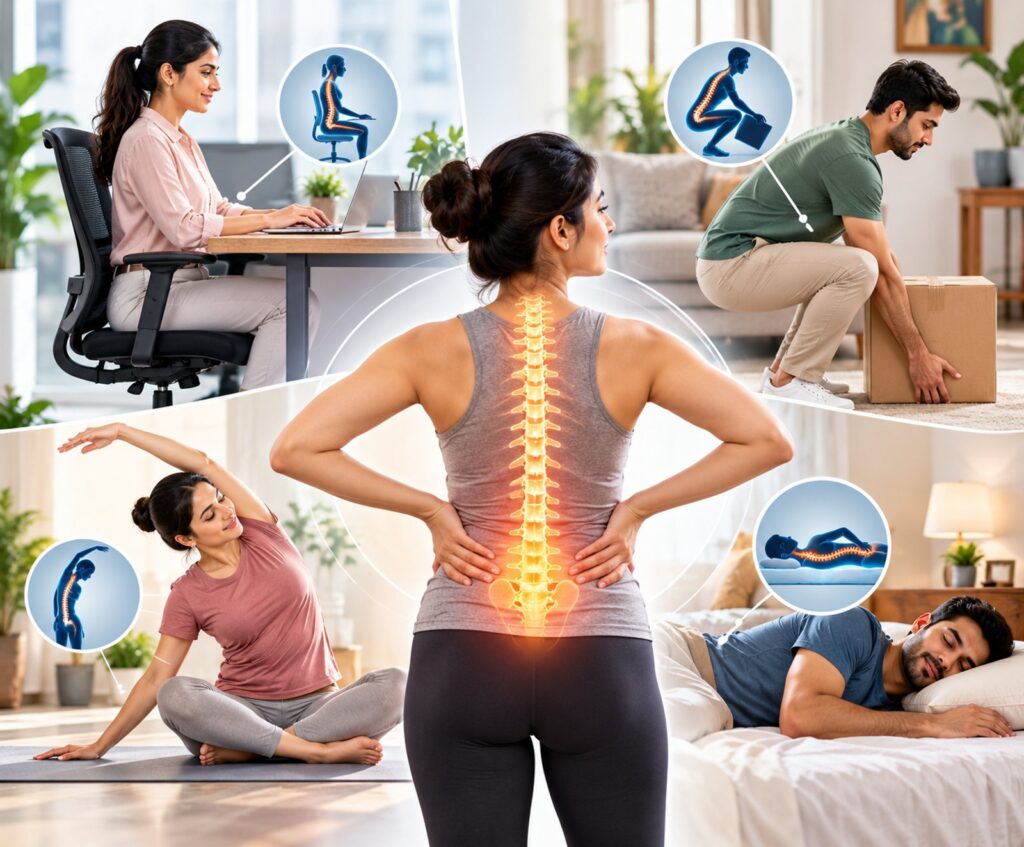
The Importance of Spine Health
World Spine Day reminds us to care for our backs every day. Your spine supports your body and helps you move. Without a healthy spine, simple tasks can become hard. For example, standing, walking, or even sitting may cause pain. According to the World Health Organization, back pain is a leading cause of disability worldwide. Because of this, it is important to learn spine health tips and make good choices daily. When you protect your spine, you also protect your overall health.
Common Spine Problems Linked to Daily Habits
Many people develop spine problems from daily routines. For instance, sitting for long hours or lifting heavy objects the wrong way can hurt your back. Even poor posture while using a phone or computer can lead to pain. Some common spine problems include:
However, you can prevent many of these issues by changing your habits. Simple steps can make a big difference in your spine health.
Ergonomic Tips for Spine Protection at Work
Many people spend hours at a desk or computer each day. Because of this, using ergonomic spine care at work is key. Ergonomics means setting up your workspace to fit your body. Here are some tips to help prevent back pain at work:
Additionally, try to sit up straight and avoid crossing your legs. These simple changes can help you care for your spine at work.
Healthy Spine Habits at Home
At home, your habits also affect your spine. For example, how you sit, sleep, or lift things matters. Here are some healthy spine habits at home:
Moreover, staying active at home helps keep your spine strong. Even small changes can protect your back for years to come.
Exercises and Stretches for a Strong Spine
Regular movement is one of the best ways to keep your spine healthy. Because your back muscles support your spine, they need to stay strong and flexible. Here are some simple exercises and stretches:
Before starting new exercises, you may want to check with your doctor, especially if you have back pain or other health issues. Still, most people benefit from regular stretching and movement.
Preventing Spine Injuries in Everyday Life
Spine injuries can happen at any time, but you can lower your risk. For instance, always use proper lifting techniques. When carrying heavy bags, switch sides often. If you need to move something large, ask for help. Furthermore, wear shoes that support your feet and avoid high heels for long periods. At home, keep walkways clear to prevent trips and falls. By making these habits part of your daily life, you help protect your spine and stay active longer.
Conclusion
If you have back or neck pain, or want advice on spine care, visit Dr. Ratan for expert orthopedic support. Take the first step toward a healthier spine and a more active life today.